Table Of Content
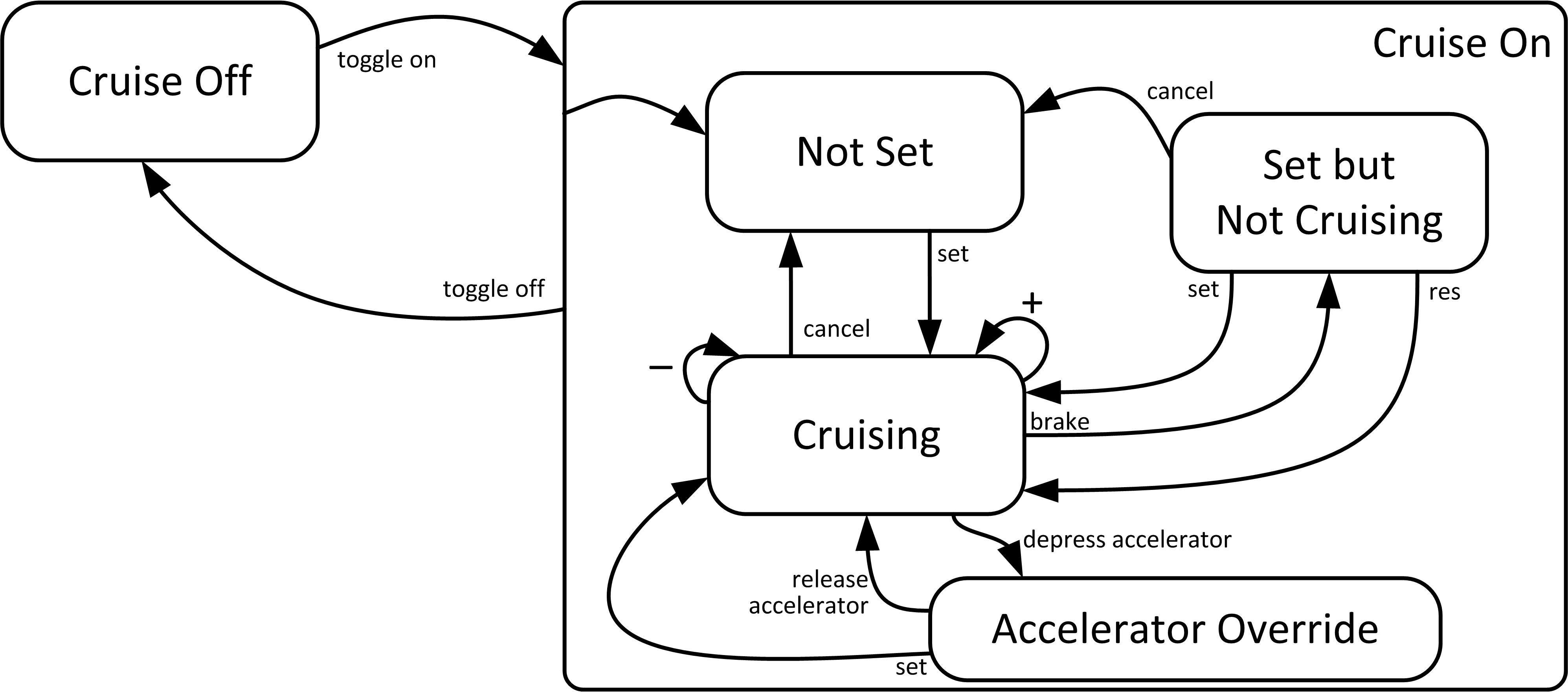
Modern cruise control systems began to emerge in the 1990s, with manufacturers incorporating more advanced digital technology into the design. Other systems such as LiDAR, radar, sonar and camera-based solutions were soon added, increasing the car’s ability to sense oncoming traffic, which in turn helped the vehicle to determine speed and avoid potential accidents. Cruise control has come a long way since first invented and patented by Ralph Teetor in 1950, who originally named it the “Speedostat”. Chrysler Corporation was the first manufacturer to offer the groundbreaking mechanism as an option on several of its luxury vehicle models nine years later. Today, cruise control is rapidly becoming the standard on all new vehicles, providing drivers with increased convenience on their daily drive. The cruise control system controls the speed of your car the same way you do -- by adjusting the throttle position.
How Cruise Control Systems Work
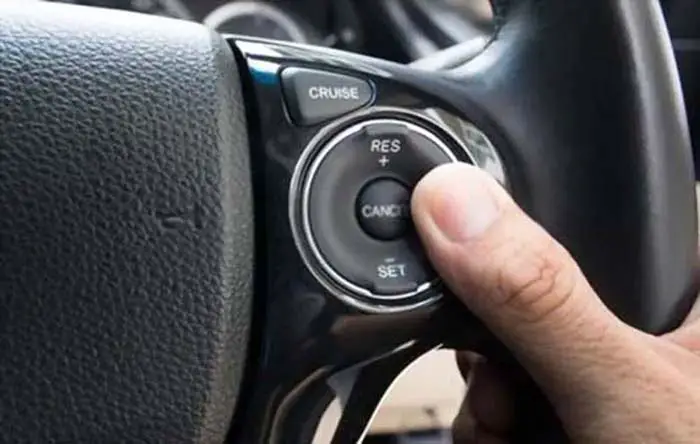
The “Cancel” button, often marked with the symbol “CRUISE” or “OFF,” deactivates the cruise control system. Pressing this button disengages the system and allows the driver to regain full control over acceleration and braking. It is important to note that the brake pedal can also automatically deactivate cruise control when pressed.
Is it safe to use cruise control while driving?

If the car starts to slow down, the cruise control can see this acceleration (slowing down and speeding up are both acceleration) before the speed can actually change much, and respond by increasing the throttle position. These systems use a small, electronically-controlled valve to regulate the vacuum in a diaphragm. This works in a similar way to the brake booster, which provides power to your brake system. Cruise control systems, even adaptable cruise control, may not always detect these streets correctly, causing accidents. Top safety scores are a plus, as is the adaptive cruise control, semiautonomous parking and 180-degree front-end camera. ICC systems can also recognize lane markings and keep the car centred within the lane, providing additional safety and convenience benefits.
Examples of adaptive cruise control in a Sentence
The driver was able to set the chosen speed using a lever on the steering column. What we’d consider modern cruise control came about in the late 1940s, invented by a man named Ralph Teetor. Teetor, who was completely blind, was one of the foremost automotive engineers of his generation. His invention, first called ‘Speedostat’, was introduced in a Chrysler car as a luxury option.
When traffic slows down or comes to a stop, the Stop-and-Go Cruise Control system automatically applies the brakes to bring the car to a complete stop. When the traffic ahead starts moving again, the system automatically accelerates the car to follow the flow of traffic. Some ACC systems also come with collision warning systems that alert the driver if the car gets too close to the vehicle ahead. Some systems can also detect pedestrians, animals, or other obstacles and apply the brakes if necessary. Adaptive cruise control is just a preview of the technology being developed by both companies. These systems are being enhanced to include collision warning capabilities that will warn drivers through visual and/or audio signals that a collision is imminent and that braking or evasive steering is needed.
Two companies are developing a more advanced cruise control that can automatically adjust a car's speed to maintain a safe following distance. This new technology, called adaptive cruise control, uses forward-looking radar, installed behind the grill of a vehicle, to detect the speed and distance of the vehicle ahead of it. Once the cruise control system is activated, the driver can adjust the speed using speed control buttons. These buttons allow the driver to increase or decrease the set speed in small increments.
The 77-GHz Autocruise radar system made by TRW has a forward-looking range of up to 492 feet (150 meters), and operates at vehicle speeds ranging from 18.6 miles per hour (30 kph) to 111 mph (180 kph). Delphi's 76-GHz system can also detect objects as far away as 492 feet, and operates at speeds as low as 20 mph (32 kph). The most important input is the speed signal; the cruise control system does a lot with this signal. First, let's start with one of the most basic control systems you could have -- a proportional control.
Standard cruise control is the most basic form of speed control system that has been around for several decades. It allows the driver to set a desired speed and maintain it without having to keep their foot on the accelerator pedal. Once activated, the system uses electronic sensors to monitor the speed of the vehicle and automatically adjusts the throttle to maintain a constant speed. Most systems will prevent the vehicle from increasing engine speed to accelerate beyond the chosen speed. However, they will not apply the brakes in the event of overspeeding downhill, nor stop the car from going faster than the selected speed even with the engine just idling.
Path to Autonomy: Self-Driving Car Levels 0 to 5 Explained - Car and Driver
Path to Autonomy: Self-Driving Car Levels 0 to 5 Explained.
Posted: Tue, 03 Oct 2017 07:00:00 GMT [source]
For instance, the cruise control pictured below can accelerate or decelerate the car by 1 mph with the tap of a button. There are also several important safety features -- the cruise control will disengage as soon as you hit the brake pedal, and it won't engage at speeds less than 25 mph (40 kph). In some cars, the system will cruise at the current speed, in others it might need to be set.
ICC not only maintains a safe distance from the vehicle ahead but also adjusts the speed of the vehicle to match the flow of traffic. By actively adjusting the car’s throttle, cruise control works to maintain the speed of the car without needing the driver to do anything. In mechanical setups, the system activates the throttle valve with a cable connected to an actuator, which ensures the engine generates enough power to maintain its current speed. However, in newer cars, that use a drive-by-wire throttle body, cruise control is completely electronic. This results in a more predicative system, whereby it can slow down or speed up depending on what the target speed is. It also allows the driver to increase or decrease their speed, usually using buttons on the steering wheel.
There are several variations of semi-autonomous cruise control that include additional convenience features for the driver. Cruise control can be installed on manual transmission cars, but it requires a more advanced system than the one used for automatic transmissions. Manual transmission cruise control systems are typically more expensive and less common.
This type of cruise controle is designed to help drivers reduce stress and fatigue when driving in heavy traffic conditions. The system uses sensors and cameras to detect the distance and speed of the vehicle ahead. Adaptive Cruise Control (ACC) is an advanced form of speed control that uses sensors and radar to detect the distance between the driver’s car and the vehicle ahead, unlike other types of cruise control systems. This type of cruise control automatically adjusts the speed of the vehicle to maintain a safe following distance and can even bring the vehicle to a complete stop if necessary. The system uses sensors and radar to detect the distance between the driver’s car and the vehicle ahead.
These advanced systems are known as adaptive cruise control, intelligent cruise control, or active cruise control. A good cruise control system accelerates aggressively to the desired speed without overshooting, and then maintains that speed with little deviation no matter how much weight is in the car, or how steep the hill you drive up. Controlling the speed of a car is a classic application of control system theory.
The system uses a forward-facing camera and sensors to detect the speed and distance of the vehicle in front of the driver. If the vehicle ahead slows down or speeds up, ICC automatically adjusts the speed of the driver’s car to maintain a safe following distance. Unlike regular speed control, ICC can also bring the car to a complete stop and resume driving when the vehicle ahead starts moving again. Intelligent cruise control goes even further, using artificial intelligence to learn the driver’s behaviour and adjust the speed of the vehicle before the driver takes action. Stop-and-go cruise control is ideal for use in heavy traffic and can bring the vehicle to a complete stop if necessary, while speed limiters are designed to limit the maximum speed of the vehicle. Each type of cruise control system has its own advantages and disadvantages, and drivers should choose the one that best suits their needs.
Driving while fatigued is never a good idea, but even less so while using cruise control. Utilizing the system may add to your fatigue, as you give your vehicle more control of the journey. Unlike the NSX, the Venza had very comfortable seats and adaptive cruise control. A governor was used by James Watt and Matthew Boulton in 1788 to control steam engines, but the use of governors dates at least back to the 17th century. On an engine, the governor uses centrifugal force to adjust the throttle position to adapt the engine's speed to different loads (e.g., when going up a hill).
It then uses that information to adjust its own speed and keep it at a safe distance. Cruise control is an automotive feature that enables drivers to set a desired speed for their vehicle. Once activated, the cruise control system maintains the set speed without the need for constant pedal input.


No comments:
Post a Comment